Programma
Veerkracht met open data
Hoe kunnen open geo data ons helpen om sneller te reageren op de grote uitdagingen van vandaag? Belangrijke veranderingen in klimaat en milieu, maar ook in de geopolitiek, vereisen een veerkrachtig beleid. Open (geo) data vormt hierbij een cruciale bouwsteen voor een toekomstgerichte samenleving. In deze open data track gaan we dieper in op hoe open geo data vandaag al het verschil maakt. Aan de hand van inspirerende praktijkvoorbeelden van onder meer FOD BOSA, Digitaal Vlaanderen, CERAC, VITO en het NGI, tonen we hoe onderzoekers en beleidsmakers samen maatschappelijke uitdagingen aanpakken met de rijkdom aan beschikbare geo-informatie.
Let op: het programma weerspiegelt de taal (NL/FR/EN) waarin de presentaties zullen worden gegeven.
Building resilience with open data (EN)
Bart Hanssens - FOD BOSAThis presentation will share initial reflections on how open (geo) data can be used to improve resilience.
Open Data: op zoek naar een nieuwe balans (NL)
Bart Rosseau - Digitaal VlaanderenOpen data vraagt vandaag om een slimme evenwichtsoefening: zoveel mogelijk openheid bieden om innovatie en samenwerking te stimuleren, terwijl we tegelijk kwaliteit, betrouwbaarheid en bescherming garanderen. Vlaanderen zet in op robuuste standaarden, sterke metadata en veilige ontsluitingsmechanismen, zodat data bruikbaar én verantwoord gedeeld kan worden. Door openheid te combineren met zorgvuldige governance bouwen we aan een duurzaam datalandschap dat vertrouwen wekt, hergebruik versterkt en veerkracht creëert — voor burgers, bedrijven en beleidsmakers.
OME2 High-Value Large-Scale Prototype (EN)
Annie Royen - Nationaal Geografisch Instituut (NGI)Open Maps For Europe 2 (OME2) has released the final version of its high-value large-scale prototype, covering 10 European countries (Austria, Belgium, Czech Republic, Denmark, Finland, France, Luxembourg, Spain, Switzerland and The Netherlands). OME2 is available as open data and easily accessible by the end user.
The prototype consists in a single dataset with 1: 10 000 scale authoritative administrative boundary, transport and hydrographic data. It was created using a unique production process that harmonises and edge-matches official open geospatial data from national mapping, land registration and cadastral agencies (NMCAs) across Europe.
A New Era of Geo Intelligence (EN)
Dennis Clarijs - VITOHumanity is entering a decade where resilience depends on our ability to understand a rapidly evolving landscape in real time. Decisions in policy, strategy and military are ever increasingly reliant on near-real time (geo)-intelligence. Building on the Copernicus (open data) ecosystem, we are helping to shape a new generation of geo intelligent platforms.
We introduce technologies that redefine what Earth observation systems can be: secure, custom data collection onboarding, fusing own trusted data with global and upcoming satellite streams; AI training on demand shape models as dynamic as the world they monitor; agentic AI layers that interpret change through the lenses of biodiversity, agriculture, water, resilience, military and beyond.
These capabilities transform open data platforms like Terrascope and the Copernicus Data Space Ecosystem into living, evolving engines of planetary intelligence. A glimpse into how geo intelligence is becoming a cornerstone of a resilient, regenerative future.
The first Belgian Climate Risk Assessment (BCRA) (NL/FR/EN)
Aurore Brunson - Centrum voor Risicoanalyse van Klimaatverandering (CERAC)Droughts, floods, soil degradation and the loss of pollinators are no longer hypothetical consequences of climate change; they already affect our daily lives. In its BCRA report, CERAC identifies 28 major risks linked to climate change and ecosystem degradation in Belgium, grouped into five categories: economy, health and well-being, food systems, ecosystems, and infrastructure and buildings. Addressing these risks and strengthening resilience requires (open) geospatial data to understand impacts, identify vulnerabilities, and support climate adaptation.


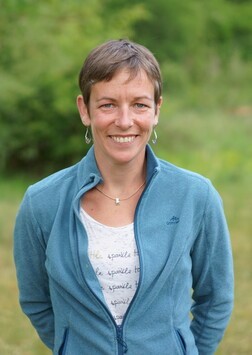
Spreker
Aurore Brunson
Expert - Centrum voor Risicoanalyse van Klimaatverandering (CERAC)
PresentatieGeo voor wereldwijde doelen
Geografische informatie stopt niet aan de landsgrenzen. In deze sessie verkennen we hoe internationale samenwerking bijdraagt aan een beter begrip en gebruik van geodata, en hoe wereldwijde en Europese initiatieven elkaar versterken. We bekijken hoe landen en organisaties wereldwijd samenwerken om data en kennis te delen, en hoe internationale kaders richting geven aan de ontwikkeling van nationale geoinformatiesystemen.
Hoewel België een klein land is, laat het op internationaal vlak een duidelijke stempel na, met actieve bijdragen aan Europese en mondiale initiatieven en een sterke expertise die wereldwijd weerklank vindt. Deze track brengt inspirerende voorbeelden van samenwerking en toont de meerwaarde van een gemeenschappelijke visie op geodata voor beleid, economie en maatschappij.
INSPIRE: past, present and future in a new European landscape (EN)
Marco Minghini - European Commission - Joint Research CentreA new policy landscape is emerging in Europe, driven by rapid technological developments, rising geopolitical pressures and concerns about digital sovereignty. In this context, enabling data access, usage and control has become increasingly strategic, and geospatial data is no exception. The European Commission has recently proposed a major revision of the INSPIRE Directive to align it with today’s realities, which differ dramatically from those that existed when the Directive entered into force two decades ago. The talk will review the achievements and lessons learnt from INSPIRE to date, map the current European policy framework governing (geospatial) data sharing, and examine INSPIRE’s past, present and future evolution, highlighting concrete opportunities for stakeholders together with the key challenges to address.
Operational Flood and Emergency Mapping from Space: How Belgium, ESA and EU Copernicus Turn Data into Decisions (EN)
Jan Verbesselt - Belgian Science Policy OfficeThis presentation shows how Belgium, ESA and Copernicus transform satellite data into operational information for floods and other emergencies. Through concrete examples, it explains how multi-source geospatial data are processed into rapid and reliable maps that support decision making by emergency services and policymakers. The presentation also highlights Belgium’s contribution to the European Space Agency and the operational European Copernicus Earth observation programme, and how this cooperation enables Emergency Mapping.
United Nations Global Geospatial Information Management (EN)
Nicholas Brown - United Nations Global Geodetic Centre of Excellence (UN-GGCE)This presentation provides an overview of the United Nations Global Geospatial Information Management (UN-GGIM), a global mechanism established to strengthen the governance, integration, and use of geospatial information across Member States. It outlines UN-GGIM’s role in setting international frameworks, norms, and standards that support evidence-based decision-making and sustainable development. The talk highlights the societal and economic impacts of geospatial information, including its contribution to disaster risk reduction, climate resilience, and digital transformation. It also examines how UN-GGIM fosters international collaboration and capacity development, particularly through initiatives such as the Integrated Geospatial Information Framework (IGIF). Key activities planned for 2026 are presented, with a focus on advancing strengthening national capabilities and enhancing data interoperability. The session concludes by reflecting on the growing strategic importance of geospatial information in addressing complex global challenges and supporting the 2030 Agenda for Sustainable Development.
UN-IGIF - Integrated Geospatial Information Framework - in practice (EN)
Joep Crompvoets - KU Leuven , Johannes Van Geertsom - Nationaal Geografisch Instituut (NGI)This presentation examines and demonstrates the application of the United Nations Integrated Geospatial Information Framework (UN-IGIF) as a mechanism for strengthening national geospatial information management at the institutional level, both within and across UN Member States, and for supporting the implementation of the Sustainable Development Goals (SDGs). The Framework guides countries through a process of transformational change by promoting an integrated approach to geospatial information management that is aligned with national strategies, institutional arrangements, and development priorities. As a multi-dimensional, United Nations–mandated framework, the UN-IGIF addresses clear policy needs and provides a structured pathway for improving national geospatial capabilities. By doing so, it acts as a catalyst for economic growth and opportunity, while enabling better-informed decision-making in support of national development priorities and the SDGs.

Spreker
Marco Minghini
Scientific Project Officer - European Commission - Joint Research Centre
Presentatie
Spreker
Jan Verbesselt
Belgian Delegate at ESA and EU Copernicus Earth Observation programs - Belgian Science Policy Office
Presentatie
Spreker
Nicholas Brown
Head of Office - United Nations Global Geodetic Centre of Excellence (UN-GGCE)
Presentatie

Spreker
Johannes Van Geertsom
Coordinator International - Nationaal Geografisch Instituut (NGI)
PresentatiePartners